You can set up an ice bath at home for anything from €30 to over €5,000. A cheap pod and a few bags of ice will get you started. However, if you plan to plunge most days, a chilled plunge tub saves money and hassle over time. This guide covers every option in Ireland, what each one really costs, and how to use it safely.
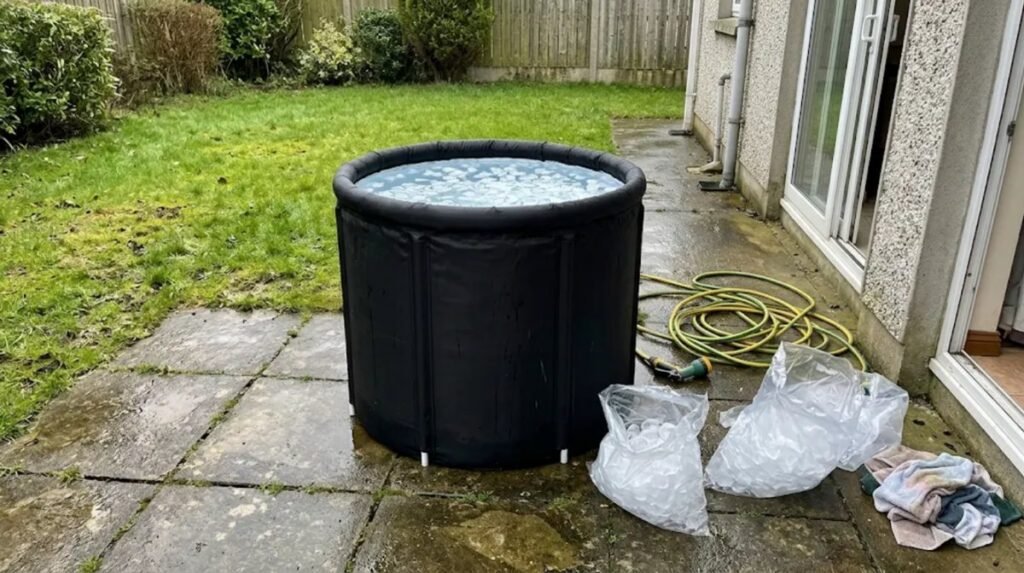
Your options for an ice bath at home
There are four main ways to do it. Each one suits a different budget and routine.
| Option | Typical price | Best for |
|---|---|---|
| Your bath or a bin with ice | €0 to €30 per session | Trying it out |
| Inflatable or foldable pod | €30 to €250 | Occasional use |
| Insulated plunge tub | €400 to €1,500 | Regular use in cooler months |
| Chilled plunge tub | €2,500 to €7,000 | Daily use all year |
Using your own bath or a wheelie bin
The simplest ice bath at home is the one you already own. Fill the bath with cold water, then add ice until it sits around 10 to 15°C. In winter, Irish mains water is often cold enough on its own, so you may not need much ice at all.
However, the catch is the ice. A standard bath needs roughly 10 to 20 kg to make a real difference in summer. At shop prices, that soon adds up. A clean wheelie bin also works for a quick dip, but it is awkward to get in and out of safely.
Lidl, Aldi and other budget ice baths
Lidl and Aldi sometimes sell inflatable or foldable ice baths as middle aisle specials. They usually cost under €50 and sell out fast. Similar pods from Amazon and sports shops cost €60 to €250.
Overall, these are fine for testing whether you enjoy cold plunging. On the other hand, they have little insulation, so the water warms up within hours. You will also need to empty and refill them often to keep the water clean. For more on budget spa buys, see our guide to Aldi, Lidl and B&Q hot tubs.
Insulated plunge tubs
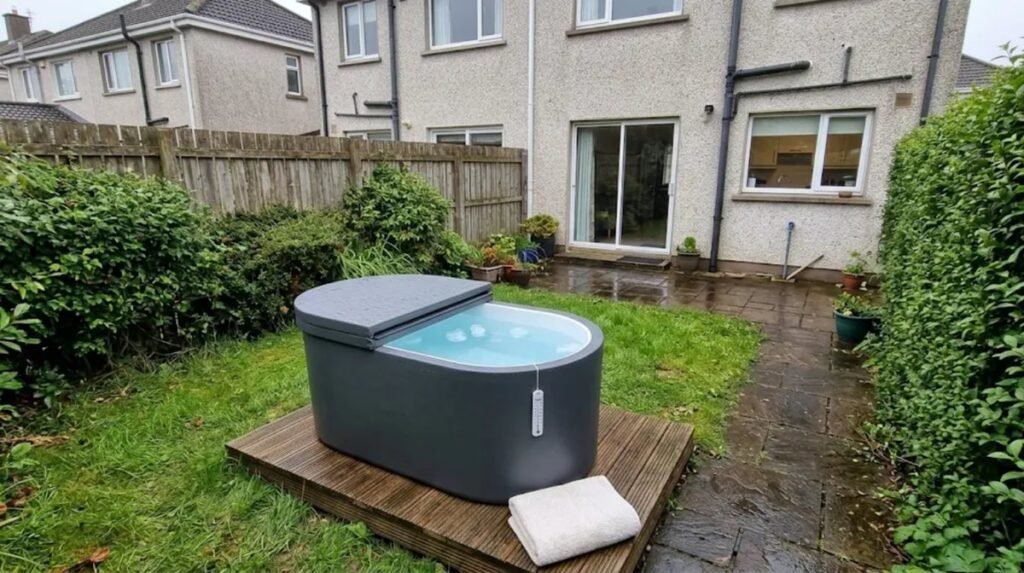
An insulated tub holds its temperature far longer than a pod. As a result, you can top it up with ice every few days instead of every session. Most come with a lid, a drain and a sturdy shell that copes with Irish weather.
In addition, from October to April, an insulated tub outdoors often stays between 5 and 10°C without any help. That makes it good value if you mainly plunge in the colder months.
Chilled plunge tubs
A chilled plunge tub has a built in chiller and filter. You set the temperature, and it holds it all year round. The water also stays clean for weeks with basic care, so there is no ice to buy and no daily refilling.
Chillers need power, so plan for an outdoor socket protected by an RCD and fitted by a Safe Electric registered electrician. Our hot tub electrical guide covers the same rules. Running costs are usually modest, especially in winter when the chiller rarely works hard.
If you plunge most days, a chilled tub often works out cheaper than buying ice within a year or two. You can compare models on our ice baths and cold plunge page.
Where to put an ice bath at home
- A flat, solid base: a full tub is heavy, so use paving, decking or a concrete pad.
- Some shade: keep it out of direct sun to slow warming.
- Near a tap and drain: filling and emptying is far easier.
- Close to the back door: you will want to get warm quickly afterwards.
Many people also place their tub beside a sauna or hot tub for contrast therapy. If that appeals, read our sauna and ice bath routine.
How to use an ice bath at home safely
First of all, start gently. For most people, 10 to 15°C for one to three minutes is plenty. Our guide on how cold an ice bath should be gives a full temperature and time chart.
- Never plunge alone the first few times.
- Breathe slowly and keep your head above the water.
- Get out straight away if you feel numb, dizzy or confused.
- Warm up afterwards with dry clothes and gentle movement.
- Speak to your GP first if you have a heart condition, high blood pressure or are pregnant.
Is an ice bath at home worth it?
If you only plunge now and then, a budget pod or your own bath is enough. However, if cold water has become part of your routine, an insulated or chilled tub is far more convenient. It is always ready, it stays clean, and you stop paying for ice.
Frequently asked questions
What is the cheapest way to have an ice bath at home?
Use your own bath with cold tap water and a few bags of ice. In winter, Irish tap water is often cold enough without much ice.
How much ice do I need for an ice bath?
Roughly 10 to 20 kg for a standard bath in summer. In winter you may need very little.
Can I have an ice bath without ice?
Yes. Cold tap water in winter, an insulated tub left outdoors, or a chilled plunge tub all work without ice.
Does Lidl sell ice baths in Ireland?
Lidl and Aldi sometimes stock inflatable ice baths as special buys. They are cheap but sell out quickly and have little insulation.
Get a price on an ice bath
Insulated and chilled plunge tubs delivered across Ireland and Northern Ireland.